What is Flow.Launcher built with?
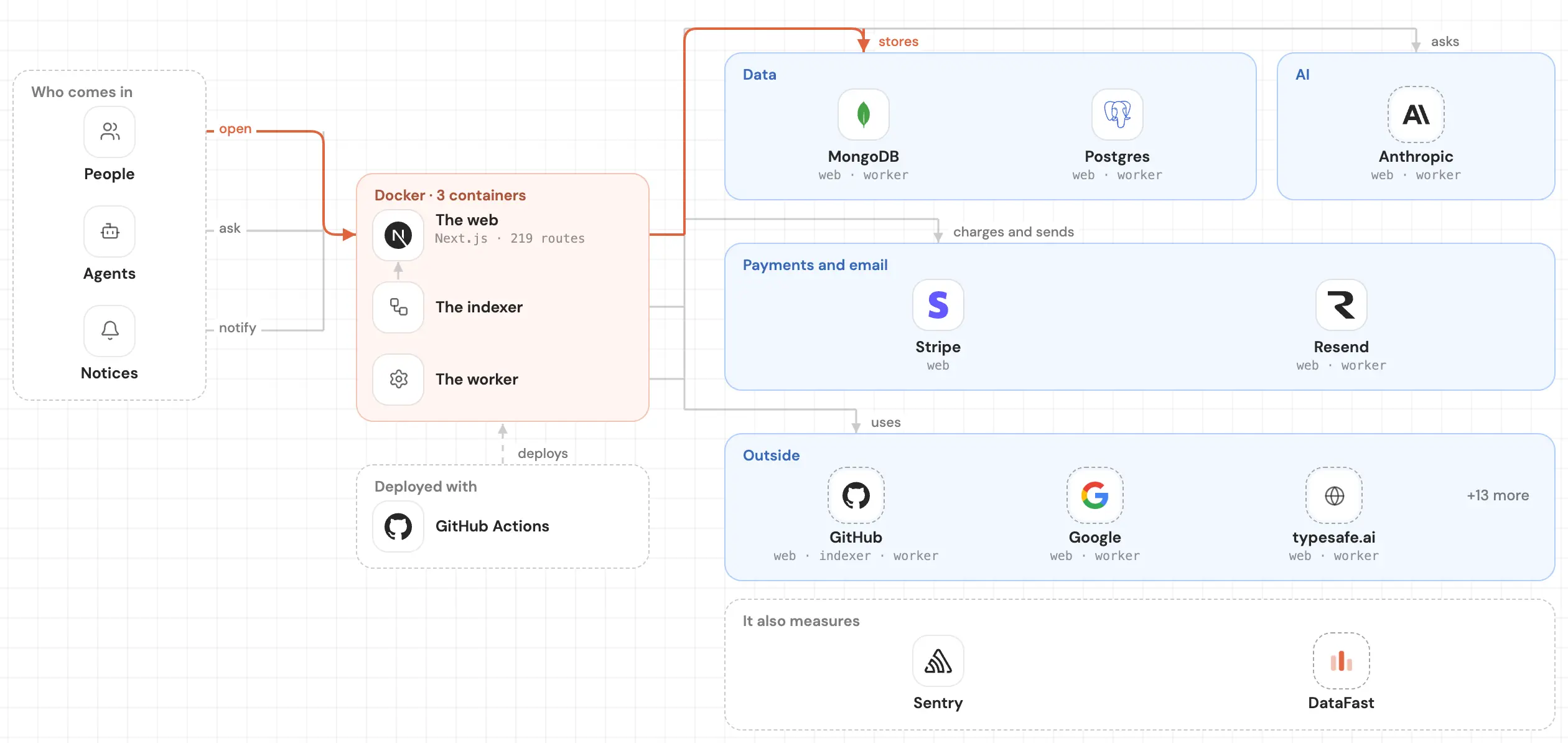
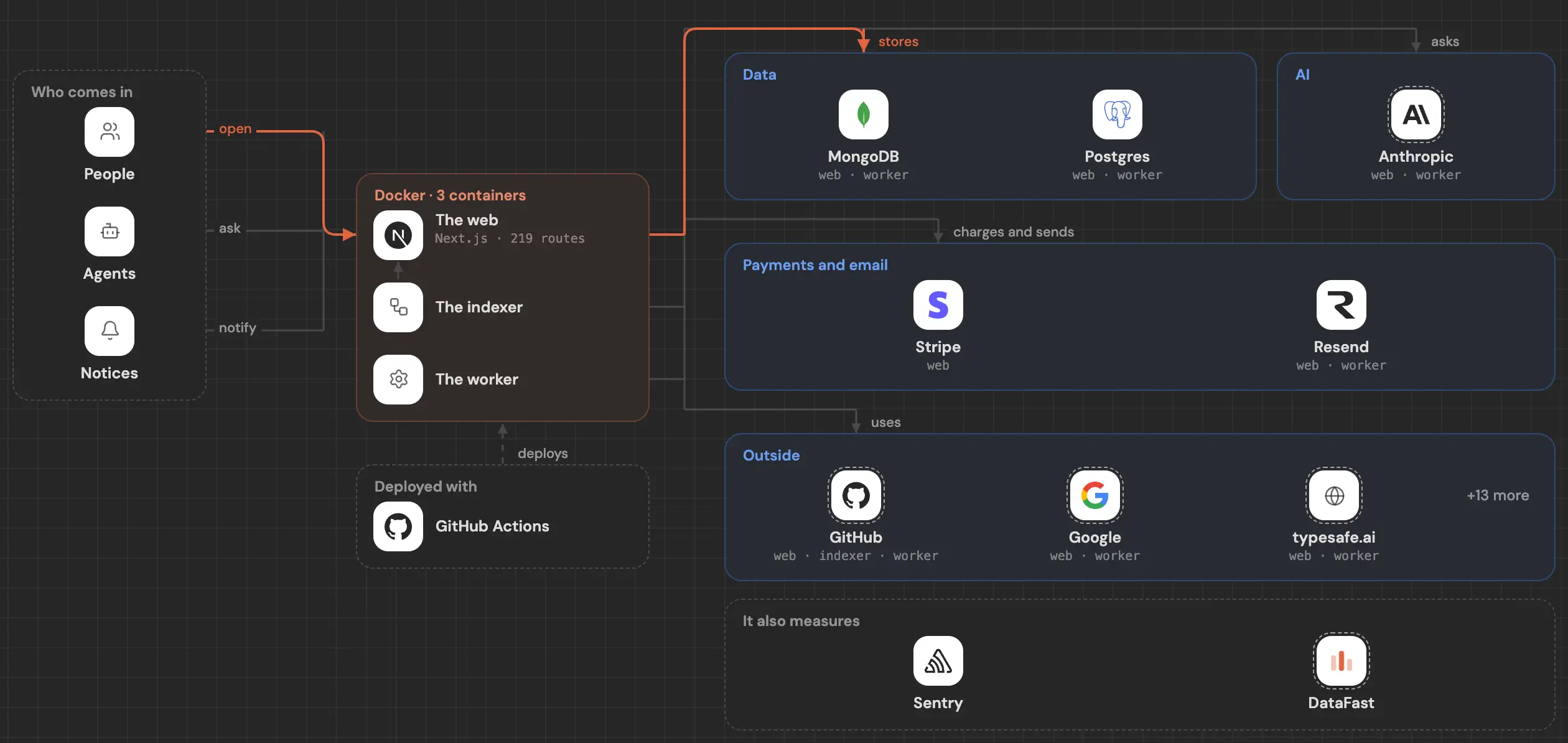
Flow.Launcher is a C# repo built with F#, CommunityToolkit.Mvvm, and Microsoft.Extensions.Hosting. It stores its data in SQLite, makes its content with Svg.Skia, is tested with Microsoft.NET.Test.Sdk, NUnit3TestAdapter, nunit, and Moq, deploys with NLog, and uses Microsoft.Data.Sqlite, BitFaster.Caching, and Microsoft.Extensions.Caching.Memory. It has 60,212 written lines, with 26 test files.
 LinkedIn
Read on November 7, 2026, at commit ff99ea0. Read it as markdown
Frontend
Interface 4
- Microsoft.Toolkit.Uwp.Notifications1 file
- SkiaSharp1 file
- AvalonEdit
- VirtualizingWrapPanel
Backend
Data 4
- SQLite3 files · Plugins/Flow.Launcher.Plugin.BrowserBookmark/ChromiumBookmarkLoader.cs, line 9
- BitFaster.Caching1 file
- Microsoft.Extensions.Caching.Memory1 file
- Microsoft.Data.Sqlite
Other repos with a similar stack
Ordered by how much of its stack they share with Flow.Launcher, then by stars.
- files-communityFiles46.6k
A modern file manager that helps users organize their files and folders.
2 of 25 in common - dotnetaspnetcore38.5k
ASP.NET Core is a cross-platform .NET framework for building modern cloud-based web applications on Windows, Mac, or Linux.
2 of 25 in common - icsharpcodeILSpy27k
.NET Decompiler with support for PDB generation, ReadyToRun, Metadata (&more) - cross-platform!
2 of 25 in common
Frequently asked questions
What language is Flow.Launcher written in?
What framework does Flow.Launcher use?
What database does Flow.Launcher use?
The proof: Plugins/Flow.Launcher.Plugin.BrowserBookmark/ChromiumBookmarkLoader.cs, line 9
What services does Flow.Launcher use?
Does Flow.Launcher have tests?
Which repos have a stack like Flow.Launcher's?
See inside your code, today.
Paste your repo and see it drawn, part by part: a medium one in under a minute.
Free, no account.
Is it your repo? Add its badge, keep it up to date or take it down →


