What is qingjian built with?
qingjian is a Rust repo built with objc2-foundation, objc2-app-kit, and Tokio. It stores its data in SQLite, signs people in with ed25519-dalek and spake2, uses AI through async-openai, candle-core, candle-nn, ort, and OpenAI, makes its content with image, objc2-core-text, resvg, and ttf-parser, runs in production with tracing, tracing-subscriber, tracing-appender, and tracing-android, and uses rusqlite. It has 231,474 written lines, with 204 test files.
 LinkedIn
Read on November 18, 2026, at commit 5479d0d. Read it as markdown
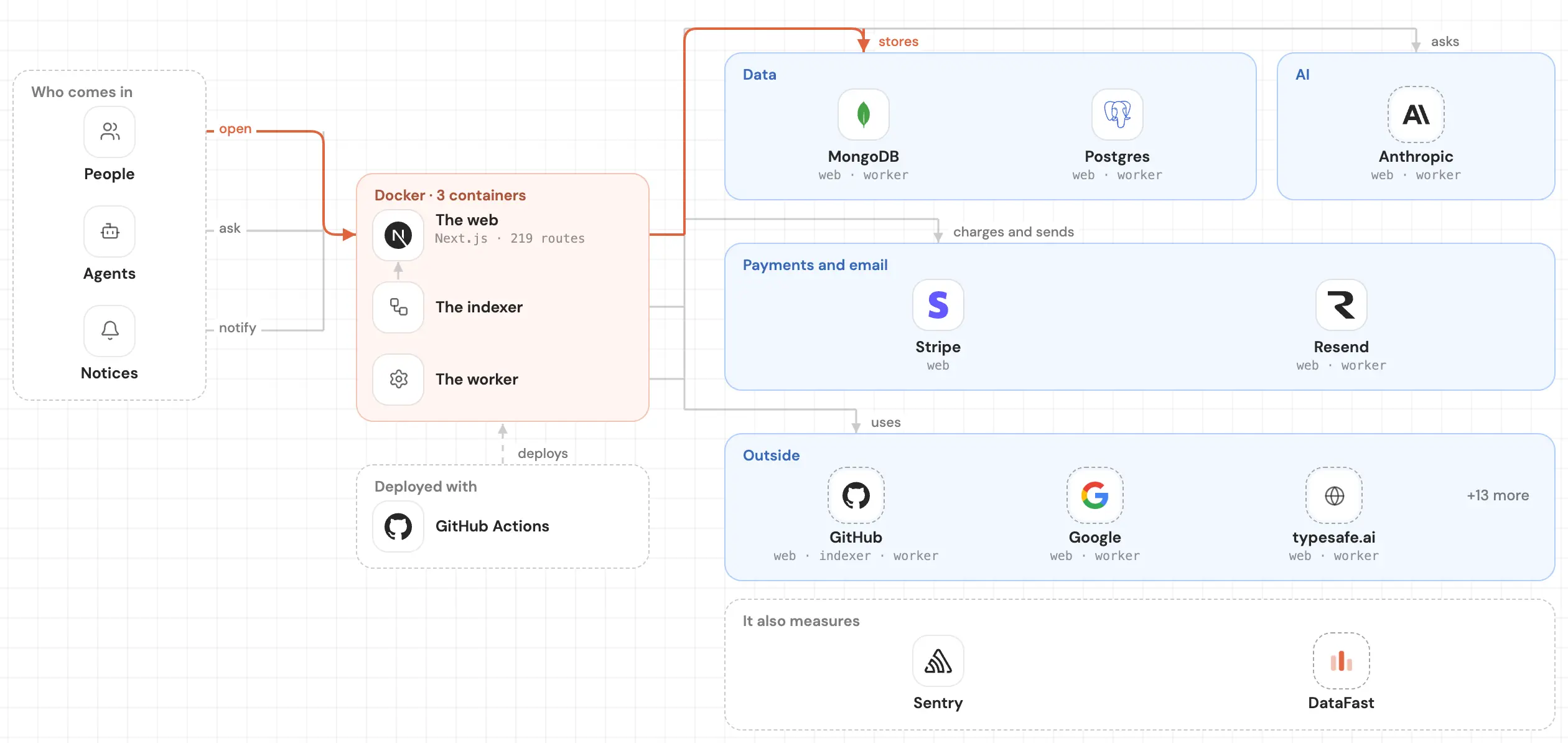
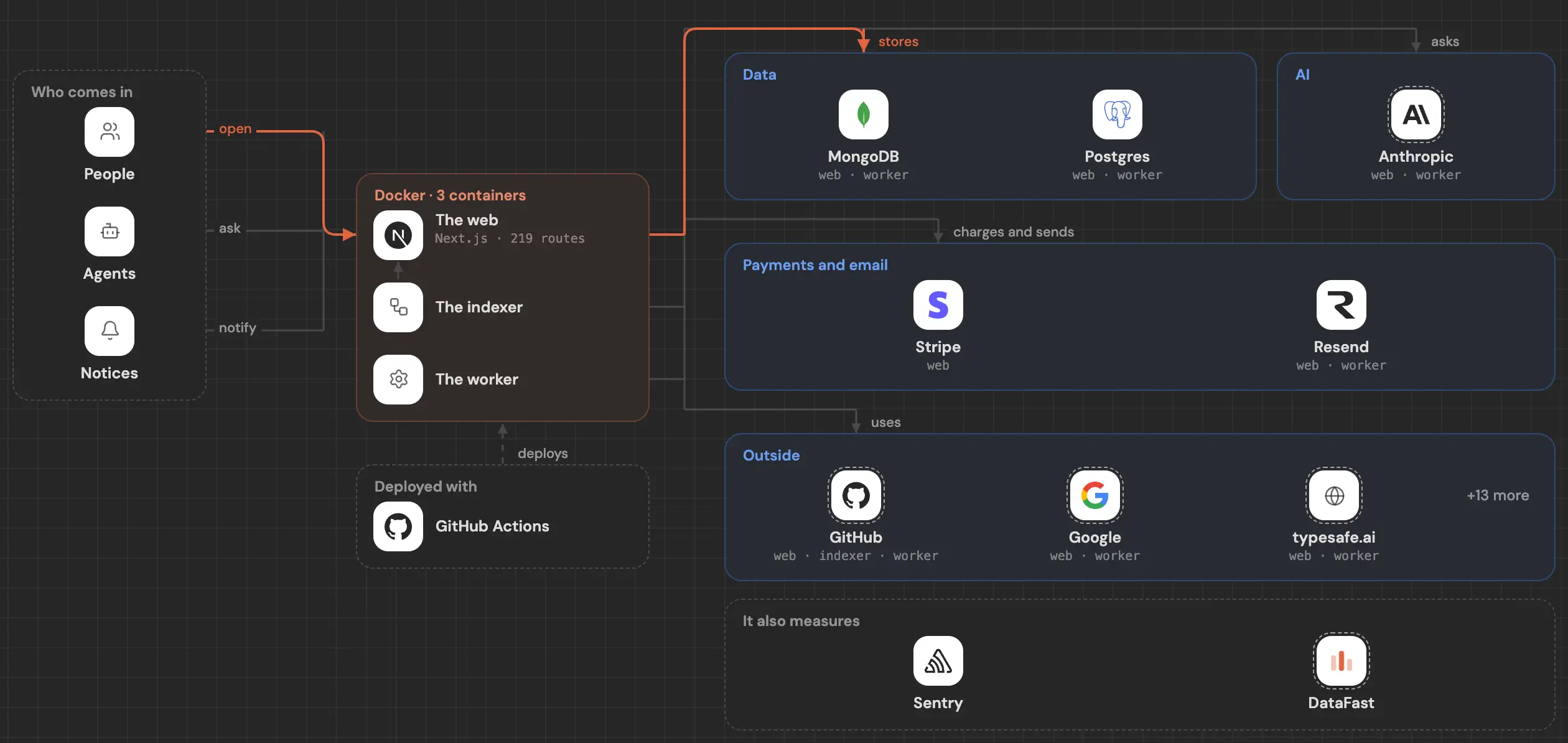
The card says what it's built with. Its whole map opens it up: every part of the code and how it connects to the rest.
Frontend
Backend
Sign-in 2
- ed25519-dalek1 file
- spake21 file
AI 4
ort1 file
- candle-core11 files
- candle-nn5 files
- async-openai
Services 1
Support
The base 3
objc2-foundation68 files
- Tokio9 files
Content 4
- image1 file
- resvg1 file
- ttf-parser1 file
Deploy 4
tracing238 files
- tracing-android1 file
Tools 1
clap4 files
Other 36
jni16 files
zbus6 files
rustls2 files
- serde191 files
- windows86 files
- serde_json78 files
- jiff44 files
- thiserror30 files
- toml21 files
- toml_edit19 files
- zerocopy13 files
- reqwest6 files
- libc5 files
- windows-registry5 files
- dotenvy4 files
- memmap24 files
- arboard3 files
- flate23 files
- foldhash3 files
- uuid3 files
- rayon2 files
- sha22 files
- tungstenite2 files
- webpki-roots2 files
- base641 file
- ferrous-opencc1 file
- if-addrs1 file
- mdns-sd1 file
- sys-locale1 file
- tar1 file
- windows-core
- windows-numerics
Other repos with a similar stack
Ordered by how much of its stack they share with qingjian, then by stars.
- spacedriveappspacedrive39.6k
Spacedrive is an open source cross-platform file explorer, powered by a virtual distributed filesystem written in Rust.
 11 of 64 in commonCompare →
Frequently asked questions
What language is qingjian written in?
What framework does qingjian use?
What database does qingjian use?
The proof: crates/qingjian-clipboard/src/store/mod.rs, line 14
What does qingjian sign people in with?
Does qingjian use AI?
What services does qingjian use?
Does qingjian have tests?
Which repos have a stack like qingjian's?
See inside your code, today.
Paste your repo and see it drawn, part by part: a medium one in under a minute.
Free, no account.Private repo? Sign in with GitHub
Is it your repo? Add its badge, keep it up to date or take it down →


